How to Travel With Vape Devices Safely?

Time:2026-11-08 Author:Sophia
0%

Travel with a vape device safely by planning before you pack, not while rushing through the airport. Rules can differ between airlines, airports, and destinations, so check current official guidance for every part of your journey. The phrase how to travel with vape devices safely covers more than packing a device. It also means protecting its battery, preventing leaks, and keeping travel documents and instructions easy to find. Details matter.

Before leaving, switch the device off and store it so its button cannot be pressed accidentally. Keep spare batteries protected from keys and other metal objects, and follow the manufacturer’s advice for storage and charging. Many carriers require devices with lithium batteries to remain in cabin baggage, but requirements vary. Confirm the rule with your airline rather than relying on an old travel tip. If you carry e-liquid, keep containers sealed and check applicable security limits. A small leak can soak a passport or bag lining.

Avoid charging or using the device where carrier rules or local restrictions prohibit it. Never leave a battery loose in a pocket, and do not pack damaged equipment. If a device becomes unusually hot, swollen, or starts leaking, stop handling it and seek help from airport or airline staff. That can change. A checklist helps, but it cannot replace current instructions from the people responsible for your trip. Even careful travelers miss details sometimes. Checking again is sensible.
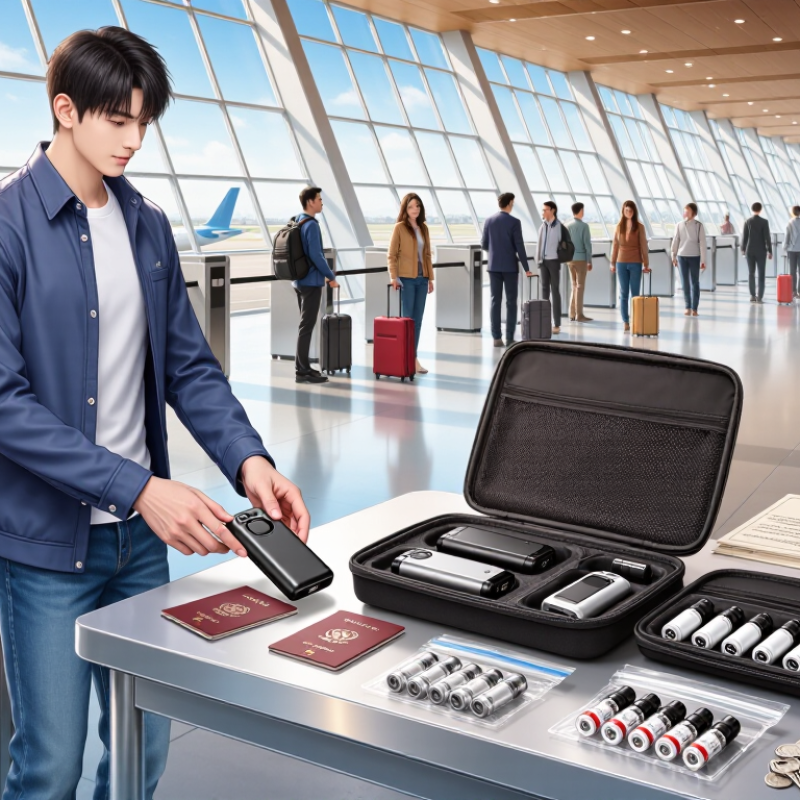
How to Travel With Vape Devices Safely?

Check FAA Rules: Vape Devices Belong in Carry-On Baggage

Before packing, check the FAA’s PackSafe guidance: vape devices belong in carry-on baggage, not checked luggage. If your carry-on is taken at the gate, remove the device and spare batteries before handing it over. Keep the device switched off and protected from accidental activation. Spare batteries should be protected from damage and short circuits. Keep it within reach.

The FAA recorded 89 lithium-battery incidents involving smoke, fire, or extreme heat aboard aircraft in 2024. This figure covers lithium batteries broadly, not vape devices alone, but it shows why careful handling matters. A loose battery rubbing against keys or coins is an avoidable risk. Use a small protective case, and check that the device cannot turn on inside your bag.

FAA guidance also says passengers must not use or charge vape devices onboard. Airline procedures can differ, so check your carrier’s instructions before leaving. The gate-check handoff is easy to overlook; taking a moment to move the device into the cabin can prevent confusion later. Don’t pack it and forget it.

Pack Spare Batteries Safely: FAA Allows Lithium Batteries up to 100 Wh

How to Travel With Vape Devices Safely?

Pack Spare Batteries Safely: FAA Allows Lithium Batteries up to 100 Wh

Before packing, check the watt-hour rating printed on each spare battery. The FAA permits spare lithium-ion batteries rated at 100 Wh or less in carry-on baggage. They must not go in checked baggage. Protect each battery’s terminals from contact with keys, coins, or other metal objects. A small plastic case works better than a loose pocket. Keep the vape device itself in your carry-on, too, and prevent accidental activation.

This limit matters because battery incidents are not just theoretical. The FAA recorded 89 incidents involving lithium batteries with smoke, fire, or extreme heat aboard aircraft in 2024. Its PackSafe guidance says spare batteries must be protected against short circuits. A damaged casing, warm battery, or loose terminal deserves attention before departure. I have found that people often check the device rules but forget the spare cell. It is an easy detail to miss.

Tips: Keep batteries in individual protective sleeves, not together in a bag. Check the Wh label before leaving home. If it is unreadable, ask the airline before travel rather than guessing. Do not charge or use a vape device during the flight. FAA rules can differ from other countries’ requirements, so check the relevant airline and destination guidance. Pack carefully. No loose cells.

Prevent Accidental Firing: Switch Off Devices and Protect Battery Contacts

Before packing a vape device, switch it fully off rather than leaving it in standby. If it has a locking control, activate it; a button pressed inside a crowded bag can still trigger heating. Check the device after switching it off, especially if its indicator light is difficult to see. Small habits matter. It is easy to assume a device is off when it is only locked.

For a removable battery, follow the device instructions and place each battery in a rigid, protective case. Keep exposed contacts away from coins, keys, cables, and other metal objects. A short circuit can cause rapid heating, even when a battery looks undamaged. Never carry loose batteries together in a pocket or pouch. A little friction can matter.

For devices with built-in batteries, use a protective sleeve and keep pressure off the power button. Keep the device dry, and check for swelling, leaks, unusual warmth, or a damaged casing before travel. If anything seems wrong, do not pack or use it; ask a qualified repair professional for guidance. Check the device manual and your travel provider’s current battery guidance before leaving.

How to Travel With Vape Devices Safely

U.S. FAA air-travel rules for vape devices and lithium batteries

A score of 1 means permitted or required; 0 means prohibited. Keep vape devices and spare batteries in your carry-on, switch devices off, prevent accidental activation, and protect battery contacts from short circuits. Do not use or charge vape devices onboard. Check your airline and local rules before departure.

Prepare E-Liquids for Screening: TSA Limits Carry-On Containers to 100 mL

Before heading to the airport, treat e-liquid like any other liquid in your carry-on. In the United States, TSA generally limits each container to 100 mL (3.4 ounces), and all containers must fit in one clear, quart-size bag. A half-empty 120 mL bottle may still be refused; the container’s capacity matters, not the amount left inside. Keep bottles upright and tightly closed. A small sealed bag can help contain leaks, but it cannot replace a secure cap. Keep it simple.

Place the liquids bag somewhere easy to reach, in case screening staff ask to inspect it. It is easy to overpack by habit; leaving an extra bottle behind may be less frustrating than dealing with a leak at the checkpoint. Check current airport and airline guidance before departure, especially for international trips, since screening procedures can differ. Keep the vape device in your carry-on, not checked luggage, and protect it from accidental activation. Small details matter. A quick check of bottle sizes before leaving home can prevent an avoidable delay.

How to Travel With Vape Devices Safely? - Prepare E-Liquids for Screening: TSA Limits Carry-On Containers to 100 mL

Travel item Screening or safety requirement Preparation tip
E-liquid in carry-on baggage Each liquid container must hold no more than 100 mL (3.4 fl oz) under the TSA liquids rule. Use containers marked at 100 mL or less; a larger bottle is not permitted even if partly empty.
Liquids bag Carry-on liquids must fit in one clear, resealable quart-size bag, subject to screening requirements. Keep e-liquid with your other travel-size liquids and place the bag where it is easy to remove for screening.
Vape device E-cigarettes and vaping devices must be carried in the aircraft cabin, not in checked baggage. Pack the device in your carry-on or on your person, and protect it from accidental activation.
Spare lithium batteries Spare batteries must be carried in the cabin; terminals should be protected against short circuits. Keep batteries in their original packaging or separate protective cases, away from metal objects.
Leak prevention Cabin pressure changes can contribute to leaks from liquid containers or vape tanks. Seal bottles securely and place them in a small leak-resistant bag. Follow the device maker’s guidance for tank storage.
Use and charging on board Using or charging vaping devices on the aircraft is prohibited. Keep the device switched off and check your airline’s rules before departure.
Airport and destination rules Security procedures and local laws can vary by airport and destination. Check current TSA guidance, airline policies, and destination restrictions before packing.

Avoid In-Flight Use and Charging: FAA Prohibits Using or Charging Vapes Aboard

A vape device needs extra care at the airport. FAA guidance says passengers must not use or charge these devices aboard an aircraft. That includes a quick puff or a brief connection to a seat outlet. Keep the device switched off during the flight, and follow any crew instructions. No exceptions for boredom.

Before boarding, pack the device in your carry-on baggage, not checked luggage. Protect it from accidental activation, and keep it away from loose coins or keys that could damage it. Spare batteries should also stay in carry-on baggage, with their terminals protected. A small pouch can help prevent scratches and accidental contact. Check your airline’s instructions, too; details can vary.

At your seat, resist the urge to charge a device that looks nearly empty. A dim battery indicator can wait until you land. I sometimes find this less convenient than expected, especially on a long trip. Still, charging in flight is not worth the risk. Heat, damage, or an unexpected battery problem could affect everyone nearby. If a device becomes hot, swollen, or starts smoking, alert a crew member immediately. Don’t try to charge or handle it casually.

FAQS

Where should I pack a vape device when flying?

Keep the device in your carry-on baggage. Protect it from accidental activation. Small details are easy to miss.

Can spare lithium-ion batteries go in checked baggage?

No. Pack spare batteries in your carry-on, not checked baggage.

What battery size is permitted in carry-on baggage?

Spare lithium-ion batteries rated at 100 Wh or less are permitted under US aviation guidance. Check each battery’s label before leaving home.

How should I protect spare batteries?

Cover each battery’s terminals with an individual protective sleeve or case. Keep them away from keys and coins. No loose cells.

What if a battery’s watt-hour rating is unreadable?

Don’t guess. Ask your airline before traveling, and check current guidance for your route.

How much e-liquid can I carry through US airport screening?

Each container must hold no more than 100 mL. All containers must fit in one clear, quart-size bag.

Does a partly empty e-liquid bottle count toward the container limit?

Yes. The bottle’s capacity matters, not how much liquid remains. A half-empty 120 mL bottle may still be refused.

How can I reduce the chance of e-liquid leaks?

Close each cap tightly and keep bottles upright. A sealed bag may contain leaks, but it cannot fix a loose cap.

Can I charge or use my vape device during a flight?

The article advises against charging or using it during the flight. Check current airline guidance, especially for international travel. I’d double-check.

Conclusion

To understand how to travel with vape devices safely, check the latest airline and aviation-security guidance before leaving. Vape devices should be packed in carry-on baggage rather than checked luggage because they contain lithium batteries. Spare batteries should also stay in your carry-on, with each battery protected from short circuits—for example, by keeping it in its original packaging or a separate protective case. Batteries up to 100 Wh are generally allowed under FAA guidance, but confirm any limits that apply to your trip.

Before boarding, switch off the device and protect its controls from accidental activation. Pack e-liquids in carry-on containers of no more than 100 mL, following the applicable screening requirements. Keep the device accessible in case security staff need to inspect it. For safety, do not use or charge a vape aboard the aircraft; wait until you have reached an appropriate place at your destination.

Sophia

Sophia

Sophia is a dedicated marketing professional with an exceptional depth of knowledge about her company's products and services. With a keen understanding of market trends and customer needs, she crafts insightful blog posts that not only inform but also engage readers, enriching the company’s online......